

Introduction
Wedding shopping in India is not simple—it’s chaotic, time-consuming, and often overwhelming.
From bridal lehengas to jewelry, footwear, and family outfits, the choices are endless. Add bargaining, travel, and confusion—and it becomes a full-time job.
If you don’t approach it strategically, you’ll waste money and still not get what you want.
This guide breaks down how to do wedding shopping in India the smart way—without stress, overspending, or regret.
Why Wedding Shopping in India is So Complicated
Let’s be honest—this is where most people lose control.
- Too many options
- No fixed pricing
- Pressure from family
- Emotional buying decisions
Reality: People don’t overspend because they’re rich. They overspend because they’re unprepared.
Step-by-Step Wedding Shopping Plan
1. Start With a Budget (Non-Negotiable)
Before entering any shop, decide:
- Bridal outfit budget
- Groom outfit budget
- Jewelry budget
- Family clothing budget
Hard truth: If you don’t fix this first, the market will decide your budget for you.
2. Decide Your Wedding Style First
Don’t start shopping randomly.
Choose a theme:
- Traditional
- Modern
- Royal
- Minimal
Your outfit, decor, and venue should match. Otherwise, everything looks disconnected.
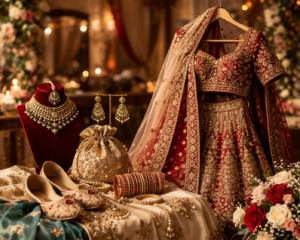
3. Bridal Shopping Comes First
Everything else depends on the bride’s outfit.
Key items:
- Lehenga or saree
- Blouse design
- Dupatta styling
- Jewelry matching
Mistake: Buying jewelry before finalizing outfit → mismatch.
4. Don’t Ignore Groom Shopping
Most grooms treat this casually—and regret it later.
Options include:
- Sherwani
- Indo-western
- Suit/tuxedo
Reality: A poorly dressed groom ruins the visual balance of the wedding.
5. Shop Smart: Local vs Designer
You have two main routes:
Local Markets (Budget Friendly):
- Better for bargaining
- More variety
- Requires time and effort
Designer Stores (Premium):
- Fixed pricing
- High quality
- Expensive
Best strategy: Mix both. Don’t go all-in on one.
6. Plan Jewelry Carefully
Jewelry is where budgets explode.
Options:
- Gold (investment + tradition)
- Artificial (budget-friendly)
- Rental (smart choice for one-time use)
Blunt fact: Spending lakhs on jewelry you’ll wear once is not smart unless you treat it as an investment.
7. Footwear & Accessories Matter More Than You Think
Ignored by most people.
- Comfortable footwear is critical
- Matching clutch/bag
- Groom accessories (watch, safa, brooch)
Reality: You’ll be standing for hours—style without comfort is stupid.
8. Give Time for Alterations
Nothing fits perfectly off the rack.
- Keep 2–3 weeks buffer
- Multiple trials are normal
Last-minute stitching = disaster.
9. Avoid Emotional Buying
This is where most money gets wasted.
- “It looks nice, let’s buy”
- “Family liked it, so take it”
Rule: If it doesn’t fit your plan or budget, don’t buy it.
10. Shop According to Your Venue
Your shopping should match your venue.
- Banquet → heavy, grand outfits
- Lawn → lighter, breathable outfits
- Destination wedding → practical + stylish
If outfit and venue don’t match, your photos will look off.
Common Wedding Shopping Mistakes in India
- Starting too late
- Not fixing a budget
- Over-shopping “just in case.”
- Ignoring comfort
- Not planning for all functions
-
FAQs (SEO Section)
When should I start wedding shopping in India?
At least 3–5 months before the wedding.
What is the average bridal shopping cost in India?
It ranges from ₹50,000 to ₹5,00,000+ depending on choices.
Is it better to buy or rent wedding outfits?
For one-time use, renting is often smarter financially.
How do I choose the right wedding outfit?
Based on your venue, theme, comfort, and budget—not trends alone.